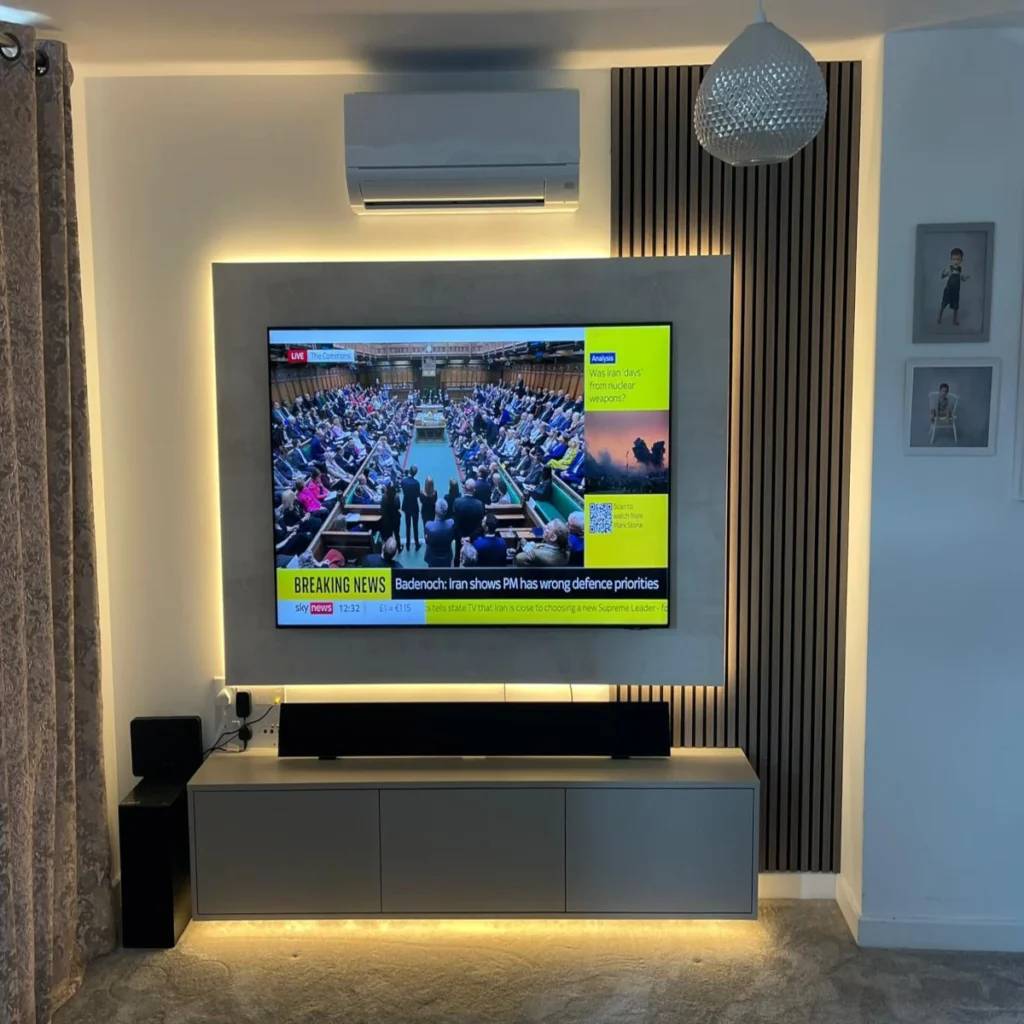
A wall-to-wall media wall can transform a living room, turning a simple TV setup into a stylish focal point with practical storage and a premium finish. More homeowners are choosing bespoke media walls because they combine visual appeal with practicality, creating a continuous space for entertainment, storage and décor. If you’re considering a wall-to-wall media wall, careful planning makes all the difference. From choosing materials and layouts to staying within budget, getting the details right helps ensure the finished result appears polished and feels like part of the room rather than an afterthought.
Why Wall-to-Wall Media Walls Are So Popular
Unlike standard TV units, a wall-to-wall media wall stretches across the full width of a room, creating a built-in appearance that looks bespoke and intentional. This approach can make a space feel more organised while providing plenty of room for storage, shelving and decorative features.
One of the biggest advantages is its versatility. A media wall can suit both modern and traditional interiors, including options ranging from clean minimalist finishes to classic styles featuring timber shelving and decorative panelling.
A well-designed installation can also hide unsightly cables, gaming consoles and media equipment. It’s a simple thing, but it makes a room feel far less cluttered.
Wall-to-Wall Media Wall Design Ideas
There are countless ways to personalise a media wall, but some designs continue to stand out because they balance practicality and style.
Integrated Shelving
Built-in shelving on both sides of the television creates symmetry and provides space for:
- Books
- Family photographs
- Decorative accessories
- Indoor plants
- Speakers and entertainment equipment
Open shelving works particularly well in larger rooms where you want to add visual interest without letting the space feel heavy.
Feature Fireplace Combination
Combining a media wall with an electric fireplace remains one of the most popular choices. The television is usually positioned above the fireplace, creating a central focal point that draws the eye.
When planned correctly, this arrangement gives the room a high-end feel without requiring major structural changes.
Contemporary Minimalist Design
For a clean and modern appearance, many homeowners choose handleless cupboards, hidden storage and smooth painted finishes. Neutral colours such as white, beige and soft grey often work best, although darker tones can create a striking effect in larger spaces.
Wood and Textured Finishes
Natural timber slats, oak shelving and textured wall panels may add warmth and character. These finishes work particularly well when paired with modern lighting and simple furnishings.
Understanding Wall-to-Wall Media Wall Costs
The cost of a wall-to-wall media wall can differ greatly based on the size, materials and level of customisation.
A number of factors influence the final price:
- Room dimensions
- Bespoke joinery requirements
- Storage features
- Fireplace integration
- Lighting installations
- Material selection
- Installation complexity
A simple media wall using standard materials will naturally cost less than a fully bespoke design with premium finishes and integrated technology. It’s tempting to focus solely on the initial cost, but quality workmanship often proves worthwhile over the long term.
Remember to budget for additional elements such as decorating, electrical work and smart lighting. These smaller costs can add up quicker than many people expect.
How to Get the Layout Right
A beautiful media wall starts with a well-planned layout. Before committing to a design, consider how the space is actually used day to day.
The television should sit at a comfortable viewing height and remain the focal point without dominating the entire room. Storage should be positioned where it’s genuinely useful rather than added purely for symmetry.
It’s also important to think about scale. In some cases, homeowners choose oversized shelving or bulky cabinets that overwhelm the space. A slightly more restrained design often creates a better result.
Lighting Considerations
Lighting serves a surprisingly important role in a media wall’s overall appearance.
Popular choice include:
- LED strip lighting behind shelving
- Recessed spotlights
- Cabinet lighting
- Ambient wall lighting
Subtle illumination can emphasize architectural features and help create a more relaxing atmosphere during the evening.
Common Mistakes to Avoid
Even a high-quality media wall can look disappointing if common design mistakes aren’t addressed early.
Some of the biggest pitfalls include:
- Positioning the TV too high
- Ignoring cable management
- Overcrowding shelves with decorations
- Choosing materials that do not match existing décor
- Forgetting future technology upgrades
Another mistake people make is copying a design from social media without considering their own room dimensions. What works beautifully in one property may feel awkward in another.
Taking accurate measurements and working with experienced designers or installers can save a lot of hassle later on.
Conclusion
A wall-to-wall media wall is one of the most effective ways to create a stylish and functional living space. Whether you prefer a minimalist design, integrated fireplace or extensive built-in storage, thoughtful planning is key to achieving a professional result. By choosing the right materials, considering practical needs and setting a realistic budget, your wall-to-wall media wall can become a standout feature that improves your home for years to come.


